Last week, a plumber from Taunton rang me in a panic. His website was getting plenty of traffic — but all the enquiries were coming from Bristol and Bath, not his actual service area. Sound familiar? You're not alone. I've been helping Somerset businesses get found online since the 1980s, and this is one of the most common problems I see.
The good news? Fixing it isn't rocket science. You just need to tell Google exactly where you are and who you serve.
Start with the Basics: Your Google Business Profile
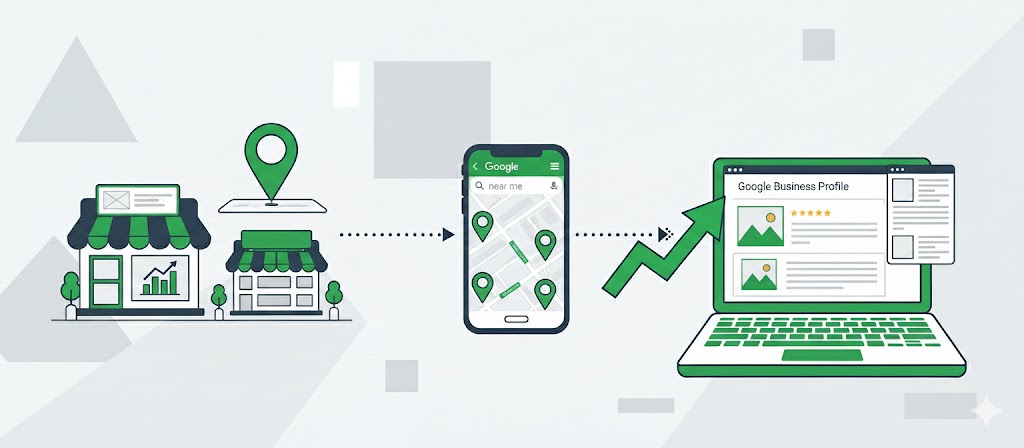
If you do nothing else today, claim and optimise your Google Business Profile (formerly Google My Business). It's free, and it's the single most important thing for local visibility.
I recently helped a café in Watchet set theirs up properly. Within three weeks, they saw a 40% increase in phone calls. Why? Because when someone searches "café near me" or "breakfast in Watchet", Google now knows exactly where they are and what they offer.
Quick tip: Add photos of your shopfront, your team, and your work. Businesses with photos get 42% more requests for directions and 35% more click-throughs to their websites.
Make sure you:
- Use your exact business name (don't stuff keywords in there)
- Choose the most specific category possible
- Add your opening hours — and keep them updated
- Respond to reviews, even the negative ones
- Post updates weekly (special offers, new products, events)
Location Pages That Actually Work
Here's where many Somerset businesses go wrong. They create one generic "Areas We Cover" page listing every town from Minehead to Yeovil. That's not going to cut it.
You need dedicated pages for each main area you serve. A shop in Bridgwater should have separate pages for:
- Bridgwater customers
- Burnham-on-Sea shoppers
- Highbridge visitors
- North Petherton locals
Each page needs to be unique and useful. Don't just swap out town names — that's what we call "doorway pages" and Google hates them. Instead, mention local landmarks, parking options, how to find you from major roads, and what makes your service relevant to that specific area.
46%
of all Google searches have local intent — people looking for businesses near them
Content That Speaks to Somerset
Generic content won't help you rank locally. You need to create content that's genuinely useful for people in Somerset. One of my clients, a B&B in Minehead, started blogging about local events and attractions. Not just "Things to do in Minehead" (everyone's done that), but specific, timely content:
- Where to park during Minehead's Victorian Week
- Best walking routes from the B&B to Dunster Castle
- Local suppliers they use for their award-winning breakfasts
- Updates on the West Somerset Railway timetable
This approach does two things. First, it naturally includes local keywords that people actually search for. Second, it provides real value to potential customers, showing you're genuinely part of the local community.
Technical Tweaks That Make a Difference
Now for the slightly nerdy bit — but stick with me, it's important.
Schema Markup
This is code that helps Google understand your business details. You can use Google's Structured Data Markup Helper to add it. Make sure you include:
- Your business type
- Physical address
- Service area (if you travel to customers)
- Opening hours
- Price range
Page Speed Matters
Somerset might not have London's internet speeds, but that's exactly why your site needs to load quickly. Use Google's PageSpeed Insights to check yours. If it's scoring below 50 on mobile, you're losing customers. I've seen bounce rates drop by 30% just by optimising images and removing unnecessary plugins.
Mobile-First Always
Over 60% of local searches happen on mobile phones. If your site isn't mobile-friendly, you might as well be invisible. Test yours on your phone right now. Can you easily find your phone number? Your address? Your opening hours? If not, fix it.
Local SEO fact: 88% of consumers who search for a local business on mobile call or visit within 24 hours.
Building Local Links and Citations
Getting other local websites to link to yours is gold dust for local SEO. But forget those dodgy link farms — you want quality, relevant links from real Somerset businesses and organisations.
Start with:
- Somerset Chamber of Commerce
- Local town council websites
- Somerset Live (if you have newsworthy content)
- Local Facebook groups and community pages
- Supplier and partner websites
- Local charity websites (especially if you sponsor events)
Citations are mentions of your business name, address, and phone number (NAP) on other websites. Make sure these are consistent everywhere. If you're listed as "Smith & Sons Ltd" on your website but "Smith and Sons Limited" on Yell.com, Google gets confused.
Reviews: Your Secret Weapon
I can't stress this enough — reviews matter. A lot. Not just for Google rankings, but for actual conversions. A recent survey showed that 87% of consumers read online reviews for local businesses.
Don't be shy about asking happy customers to leave reviews. I tell my clients to:
- Ask in person when the customer's clearly satisfied
- Send a follow-up email with a direct link to your Google Business Profile
- Put a QR code on receipts or business cards
- Respond to every review within 48 hours
One Watchet restaurant I work with saw bookings increase by 25% after they hit 50 Google reviews. People trust what other locals say.
Remember: Under UK consumer law, you can't incentivise reviews with discounts or freebies. Keep it honest and above board.
Making It Happen
Right, that's a lot to take in. Where should you start? Here's my recommended priority list:
- Today: Claim and optimise your Google Business Profile
- This week: Check your website on mobile and fix any obvious problems
- This month: Create your first location-specific page
- Ongoing: Ask every happy customer for a review
Local SEO isn't a one-time fix — it's an ongoing process. But get the basics right, and you'll see results within weeks. That plumber from Taunton I mentioned? He's now booked solid with local jobs and has stopped advertising in the local paper entirely.
Your Somerset business deserves to be found by local customers. These strategies work — I've seen it happen hundreds of times over my 40 years in this game. The only question is: when are you going to start?
Sources
- Competition and Markets Authority — Official UK guidance on online reviews and consumer law
- Think with Google — Mobile search behaviour statistics and local search data
- BrightLocal Consumer Review Survey — Annual research on how consumers use online reviews
Need Help With Your Website?
Whether you need a new website, a redesign, or help with SEO — I'd love to have a chat about how Exmoorweb can help your business grow online.
Get In TouchNo obligation. No sales pitch. Just honest advice.
About the Author: Marcus Knapman has been working with computers and building websites since the mid-1980s. Based in Somerset, he runs Exmoorweb from Williton — personally visiting customers across Minehead, Watchet, Taunton, Bridgwater, and the wider South West. With a BSc (Hons) and over 40 years of hands-on experience, he combines technical expertise with practical, no-nonsense advice.