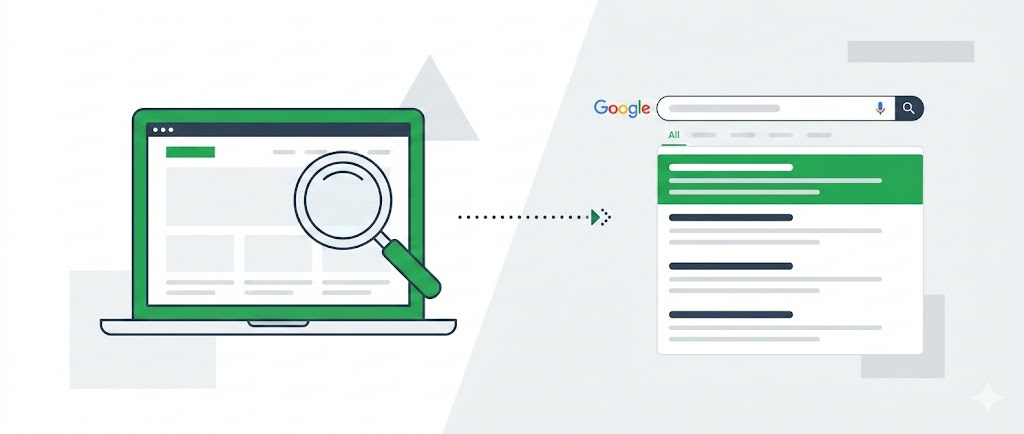
I've just finished reviewing a website for a brilliant café in Barnstaple. Beautiful food, loyal customers, fantastic reviews on TripAdvisor. But when I searched "café Barnstaple" on Google, they didn't appear until page three. That's a problem, because 75% of people never scroll past the first page of Google results.
After 40 years of building websites, I've seen this pattern repeat itself across Devon and Somerset. A plumber in Taunton gets most of his work through word-of-mouth, but his website doesn't show up when people search "emergency plumber Taunton". A charming B&B on Exmoor has a stunning website, but it's invisible to tourists searching for accommodation online.
75% of clicks happen on Google's first page
Less than 25% of searchers ever look at page two results, making first-page rankings essential for visibility
The frustrating part? Most of these visibility problems can be fixed with some straightforward changes. Let me walk you through the five main reasons small business websites don't appear on Google, and what you can do about it.
Your Website Isn't Telling Google What You Do
Google's job is to match search queries with relevant websites. If your website doesn't clearly explain what you do and where you do it, Google won't know when to show it.
I recently worked with a heating engineer whose homepage simply said "Welcome to our family business". Nowhere did it mention heating, boilers, or even which towns he covered. Google had no idea what to do with that.
The Quick Fix
Your homepage should include your main service and location within the first paragraph. Instead of "Welcome to Smith & Sons", try "Smith & Sons provides emergency boiler repairs and heating installation across Exeter and East Devon".
Key insight: Every page on your website should have a clear purpose and target specific search terms your customers actually use.
Use tools like Google's Keyword Planner or Answer The Public to discover what people are actually searching for. You might think they're looking for "domestic heating solutions", but they're probably typing "boiler repair near me".
Google Doesn't Know You Exist
Surprisingly often, websites simply aren't in Google's index. This happens when Google's crawlers can't find or access your site properly.
The fastest way to check this is to search Google for "site:yourwebsite.co.uk". If nothing appears, Google hasn't indexed your site. Even if pages do appear, you might be missing important ones.
Getting Google's Attention
Set up Google Search Console immediately. It's free, and it's the direct line between your website and Google. Submit your sitemap through Search Console, and Google will start crawling your pages more effectively.
I've seen websites go from invisible to appearing on page one within weeks, simply because we submitted a proper sitemap and fixed some basic crawling issues.
Your Website Is Too Slow
Site speed matters enormously for Google rankings. If your website takes more than three seconds to load, you're losing both visitors and search rankings.
One of my clients ran a gift shop in Minehead. Beautiful products, but their website was stuffed with huge, uncompressed photos. Load time was nearly eight seconds. After optimising the images and cleaning up the code, we got it down to under two seconds. Their Google rankings improved within a month.
Key insight: Use Google's PageSpeed Insights tool to test your website speed and get specific recommendations for improvement.
Quick Speed Wins
- Compress your images before uploading them
- Choose a decent web hosting provider (avoid the £2/month options)
- Remove unnecessary plugins and widgets
- Enable caching if you're using WordPress
Don't obsess over getting a perfect PageSpeed score, but aim for under three seconds load time. That's fast enough for both users and Google.
You're Ignoring Local SEO
Most small businesses serve local customers, but many websites don't optimise for local search. This is particularly important for trades, restaurants, retail shops, and service businesses.
Google My Business is absolutely essential. I'm amazed how many businesses either don't have a listing or haven't claimed the one that already exists. Without it, you won't appear in local map results.
Local SEO Essentials
- Claim and optimise your Google My Business listing
- Include your full address and phone number on every page
- Create location-specific pages if you serve multiple areas
- Encourage genuine customer reviews
- Get listed in local directories like Yell and Thomson Local
46% of Google searches have local intent
Nearly half of all searches are looking for local businesses, making local SEO crucial for small business visibility
Don't try to game the system with fake reviews or dodgy directory listings. Google's getting better at spotting these tactics, and the penalties aren't worth it.
Your Content Doesn't Match What People Want
Many small business websites focus on what the business wants to say, rather than what customers want to know. Your electrician website might have a lovely section about your company history, but people searching at 9pm probably want to know if you do emergency call-outs.
Think about the questions your customers ask you regularly. Those questions should become pages or blog posts on your website.
Content That Actually Helps
Create pages that answer real customer questions:
- "How much does a new boiler cost?" (for heating engineers)
- "Do you cater for weddings?" (for restaurants)
- "What's included in a full service?" (for garages)
- "Do you work weekends?" (for any service business)
If you're using WordPress, plugins like Yoast SEO can help you optimise each page for specific search terms. But remember, write for humans first, search engines second.
The Technical Stuff That Can't Be Ignored
Some technical issues will definitely hurt your Google rankings. You don't need to become a technical expert, but you should be aware of these basics.
Your website needs an SSL certificate (the little padlock in the browser). Google explicitly favours secure websites. Most modern hosting providers include SSL certificates, so there's no excuse for not having one.
Mobile-friendliness is non-negotiable. More than half of Google searches happen on mobile devices. If your website doesn't work properly on phones, Google won't rank it well.
Key insight: Test your website on actual mobile devices, not just by resizing your browser window. Real mobile testing reveals issues you might miss otherwise.
Use Google's Mobile-Friendly Test tool to check your site. If it fails, fixing mobile issues should be your top priority.
Making Google Work for Your Business
Getting your small business website to appear on Google isn't about gaming the system or finding magic shortcuts. It's about making your website genuinely useful for the people who need your services.
Start with the basics: make sure Google can find and crawl your website, optimise for local search, and create content that answers your customers' questions. Focus on site speed and mobile experience. Set up Google Search Console and Google My Business.
Don't expect overnight results. SEO takes time, typically three to six months before you see significant improvements. But the effort is worth it. That café in Barnstaple I mentioned? After implementing these changes, they're now appearing on page one for several local searches. Their online bookings have increased by 40%.
The good news is that most of your local competitors probably aren't doing these things properly either. By getting the basics right, you'll have a genuine advantage in your local market.
Sources
- SISTRIX CTR Study — Research on Google click-through rates by position
- Google Search Documentation — Official Google guidance on how search works
- Think with Google — Local search statistics and mobile usage data
Need Help With Your Website?
Whether you need a new website, a redesign, or help with SEO — I'd love to have a chat about how Exmoorweb can help your business grow online.
Get In TouchNo obligation. No sales pitch. Just honest advice.
About the Author: Marcus Knapman has been working with computers and building websites since the mid-1980s. Based in Somerset, he runs Exmoorweb from Williton — personally visiting customers across Minehead, Watchet, Taunton, Bridgwater, and the wider South West. With a BSc (Hons) and over 40 years of hands-on experience, he combines technical expertise with practical, no-nonsense advice.