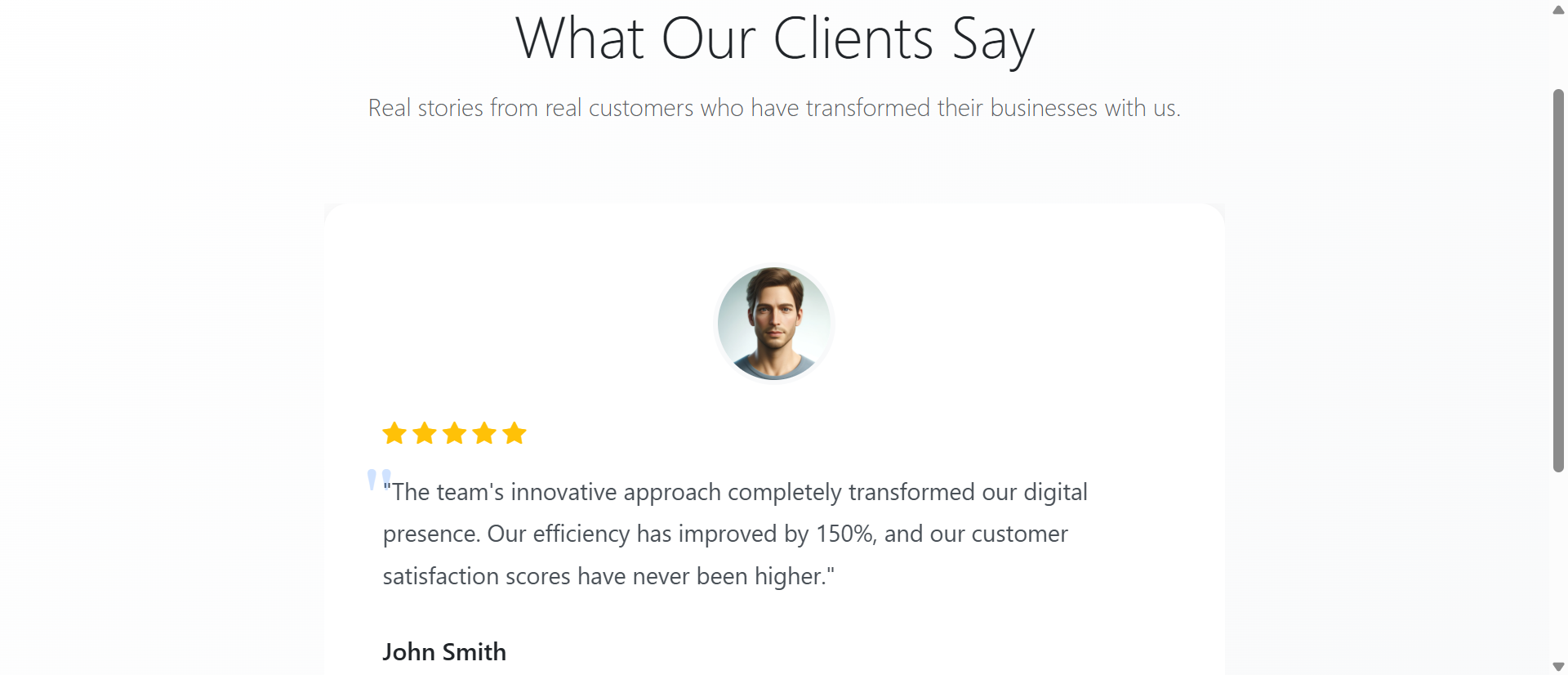
You've spent weeks collecting amazing customer testimonials. Five-star reviews. Glowing feedback. Real success stories. You add them to your website, feeling confident they'll convince new visitors to trust you. Then... nothing. Conversion rates don't budge. Visitors scroll right past your testimonials section like it doesn't exist.
Here's what's happening: Your testimonials aren't being ignored because they're not good enough. They're being ignored because they're presented like every other website—static blocks of text that blend into the background. Your brain sees the familiar pattern and instantly categorizes it as "marketing filler" that can be safely skipped. The content is valuable, but the presentation is invisible.
Why Static Testimonials Are Basically Invisible
Social proof is one of the most powerful conversion tools available. Studies show that 92% of consumers read online reviews before making a purchase decision. But here's the problem: most websites present testimonials in ways that actively prevent them from being read.
1. Wall-of-Text Syndrome
You've probably seen this: three or four paragraphs of testimonials stacked vertically down the page. Maybe they're in boxes. Maybe they have quotes around them. But they all appear at once, creating a dense block that your eyes skip over. When everything is visible simultaneously, nothing stands out. There's no focal point, no guidance for where to look first.
2. No Visual Hierarchy or Emphasis
Static testimonials give equal weight to every review. Your most impressive testimonial—the one where a customer says you transformed their entire business—sits next to a generic "great service" comment with no visual distinction. Visitors don't know which testimonial to read, so they read none of them.
3. They Don't Leverage the Power of Faces
Human brains are hardwired to focus on faces. It's evolutionary psychology. But traditional testimonial sections either skip photos entirely or make them so small they're ineffective. Without prominent photos, testimonials feel abstract and less credible. You're reading words attributed to a name, but there's no human connection.
4. Zero Motion Means Zero Attention
Movement captures attention. It's biology. Our peripheral vision is specifically tuned to detect motion because movement meant threat or opportunity to our ancestors. On a static webpage, testimonials that just sit there compete with every other element for attention—and usually lose to images, buttons, or anything that provides visual contrast.
Real-World Data: An e-commerce company replaced their static grid of 6 testimonials with a dynamic carousel showing one at a time. Interaction with testimonials increased by 247%—visitors were actually reading them now. More importantly, conversions from pages with testimonials increased by 34%. Same reviews, different presentation, dramatically different results.
How Dynamic Carousels Transform Testimonials Into Trust Machines
A testimonial carousel isn't just about making things move. It's about strategic presentation that leverages psychology, design principles, and user behavior patterns to ensure your social proof actually gets seen and believed.
1. One Testimonial, One Moment—Maximum Focus
Here's the game-changer: Instead of showing all testimonials at once (which leads to none being read), a carousel shows one at a time. This creates singular focus. There's only one thing to read. No competition for attention. Your visitor's eye lands on the carousel, and there's an immediate clear message to consume.
This forced focus dramatically increases actual engagement. When visitors see one testimonial, they read it. When they see six, they read none. The paradox of choice applies to testimonials just as much as it applies to product options.
2. Automatic Rotation Keeps It Dynamic
The carousel auto-advances every 5 seconds (or whatever interval you set). This automatic motion serves multiple purposes: First, it catches peripheral attention even when visitors are reading other content. Second, it ensures multiple testimonials get seen without requiring visitors to manually click through. Third, it creates a sense of abundance—there are clearly more testimonials beyond what's currently visible.
That last point is subtle but powerful. When visitors see testimonials rotating, they unconsciously assume there are many more reviews—social proof amplification without actually showing everything.
3. Prominent Photos Humanize the Feedback
A carousel format typically centers the customer's photo prominently. Large, circular, professional-looking headshot right at the top. This makes an enormous difference in credibility. You're not just reading a quote—you're seeing the face of the person who said it. That human connection triggers empathy and believability.
The circular photo format specifically matters. Square or rectangular photos feel formal and corporate. Circular photos feel personal and approachable. It's a subtle psychological trigger that makes testimonials feel more authentic.
4. Star Ratings Provide Visual Validation
The five-star rating system is universal language. Visitors don't have to read a single word to understand "this person was very satisfied." The visual of five gold stars provides instant credibility. And because humans process images 60,000 times faster than text, that credibility hits before conscious thought even begins.
Even better: Star ratings allow for nuance. A 4.5-star review actually feels more authentic than all 5-star reviews. It suggests real customers with genuine opinions, not cherry-picked perfect feedback.
5. Navigation Controls Signal Interactivity
The previous/next arrows and dot indicators at the bottom do more than just provide navigation. They signal to visitors that this is interactive content worth exploring. Those visual cues say "there's more here—engage with this." It transforms passive scrolling into active exploration.
Users who click through testimonials manually (rather than just watching auto-rotation) show significantly higher conversion intent. The act of clicking to see more reviews demonstrates deeper interest and investment in your credibility.
Pro Tip: The smooth fade transition between testimonials matters. Jarring slide or flip animations can feel gimmicky. A gentle fade maintains sophistication while still providing the motion that captures attention. The transition should feel elegant, not distracting.
Real-World Applications Across Business Types
Testimonial carousels work across virtually every industry, but the implementation strategy varies:
E-Commerce and Product-Based Businesses
Place the carousel on product pages, not just the homepage. Seeing rotating reviews from real customers who bought that specific product dramatically reduces purchase hesitation. A handmade jewelry store added product-specific testimonial carousels and saw a 28% increase in add-to-cart rate. The reviews answered the exact concerns potential buyers had.
Service Businesses (Consultants, Agencies, Contractors)
Your entire business is trust-based. The carousel should be prominent on the homepage, above the fold if possible. Include the customer's company name and role to add credibility. A marketing agency featured rotating testimonials from recognizable brand clients—the logo recognition plus personal testimonials created powerful compound social proof.
SaaS and Software Companies
Technical buyers are skeptical. They want proof your software actually works. Carousel testimonials that include specific metrics ("increased efficiency by 47%") combined with the customer's photo and company provide the evidence-based credibility SaaS buyers demand. One project management tool added metric-focused rotating testimonials and saw trial signups increase by 41%.
Healthcare and Professional Services
When the service involves personal care or significant life decisions, seeing real faces with real stories is critical. A dental practice used rotating patient testimonials with before/after results metrics (not photos—HIPAA compliance matters). New patient inquiries increased by 52% because potential patients could see themselves in the stories.
Educational and Course Sellers
Students want to know the course actually delivers results. Carousel testimonials showing diverse student backgrounds and specific outcomes ("got promoted within 3 months") build credibility and overcome skepticism. An online coding bootcamp featured rotating graduate testimonials with their new job titles—application completions increased by 63%.
See Social Proof in Motion
Experience how dynamic testimonial carousels transform customer feedback into compelling, conversion-driving social proof.
Try Live DemoThe Psychology of Rotating Social Proof
Understanding the psychological mechanisms behind why carousels work helps you optimize their effectiveness:
The Zeigarnik Effect (Incomplete Tasks)
When the carousel auto-rotates, visitors see a testimonial begin to fade before they finish reading it. This creates mild tension—an incomplete task. Many visitors will then manually click back or forward to finish reading, which increases engagement. The interruption paradoxically increases attention rather than decreasing it.
Social Proof Amplification Through Rotation
Seeing multiple different testimonials rotate creates the perception of abundance. Even if you only have 5 testimonials, the rotation suggests there's an endless stream of happy customers. This leverages the bandwagon effect—if many people are saying good things, it must be true.
The Mere Exposure Effect
If a visitor stays on your page long enough, the carousel might loop back to show the first testimonial again. This repeated exposure (even if subconscious) increases familiarity and trust. The message starts to feel more credible simply because it's been seen multiple times.
Pattern Interruption Through Motion
Most webpage content is static. When something moves in your peripheral vision while you're reading other content, your attention automatically shifts (evolutionary biology—motion detection). The carousel's auto-rotation creates periodic pattern interruptions that draw eyes back to the social proof.
Common Mistakes That Kill Carousel Effectiveness
Even with a beautiful carousel, you can sabotage your social proof with these errors:
Using Fake or Stock Photos
If your testimonial photos are clearly stock images or the same person with different names, you've destroyed all credibility. Visitors can spot fake testimonials instantly, and the damage to trust is worse than having no testimonials at all. Use real customer photos or none.
Testimonials That Are Too Long
A carousel testimonial should be 2-3 sentences maximum. If visitors see a paragraph of text appear, they won't read it before it rotates away. Keep it punchy and focused on one specific benefit or outcome. Save longer testimonials for a dedicated reviews page.
No Specificity—Just Generic Praise
"Great service!" is worthless. "Increased our sales by 40% in 2 months" is powerful. Every testimonial should include specific outcomes, metrics, or concrete details. Generic praise sounds fake even when it's real.
Too Fast or Too Slow Rotation
3 seconds isn't enough time to read and absorb a testimonial. 10 seconds feels like it's never going to change. The sweet spot is typically 5-7 seconds—enough time to read comfortably, but movement frequent enough to maintain attention.
Placing It Below the Fold on Critical Pages
If testimonials are buried at the bottom of your homepage or product pages, they're not doing their job. Social proof should appear near decision points—close to pricing tables, near add-to-cart buttons, on landing pages above signup forms.
Case Study: A B2B software company initially used generic carousel testimonials: "Great product, highly recommend." Engagement was minimal. They revised to specific metric-driven testimonials: "Cut our reporting time from 4 hours to 20 minutes daily." Click-through rate on carousel arrows increased by 156%, and demo requests from the testimonials page increased by 73%.
Measuring Carousel Testimonial Effectiveness
How do you know if your testimonial carousel is actually working? Track these metrics:
Interaction Rate (Clicks on Arrows/Dots)
What percentage of visitors who see the carousel manually interact with it? Low interaction might mean the testimonials aren't compelling, the navigation isn't obvious, or the auto-rotation is perfectly timed. Use event tracking in Google Analytics to measure this.
Time Spent Viewing the Carousel
Tools like Hotjar or Microsoft Clarity can show how long visitors' attention stays on the carousel section. If average viewing time is only 2-3 seconds, your testimonials might not be visually engaging enough or the content isn't compelling.
Conversion Lift on Pages With Carousels
Run A/B tests comparing pages with carousel testimonials vs. static testimonials vs. no testimonials. The conversion metric varies by business—could be purchases, demo requests, contact forms, or newsletter signups. You should see meaningful lift from carousel implementation.
Heat Maps Showing Attention Patterns
Heat mapping tools show where visitors look. The carousel should show significant attention heat. If heat maps reveal visitors are skipping the carousel entirely, placement or visual prominence needs adjustment.
Qualitative Feedback Mentions
When customers contact you, do they mention seeing testimonials from specific industries or use cases? This indicates the carousel is being noticed and resonating. Track these mentions in your CRM.
The Future of Social Proof Display
Static testimonials are becoming obsolete. Modern consumers expect dynamic, engaging content. They've been trained by social media feeds to expect movement, rotation, and interactivity. A static wall of text testimonials feels dated—and dated feels less credible.
The businesses winning conversions are those treating social proof as a strategic design element, not an afterthought. Carousels represent the current best practice, but the evolution continues toward even more dynamic implementations—video testimonials, real-time review feeds, interactive case study carousels.
But here's the critical point: No amount of fancy presentation can fix bad testimonials. The carousel is the vehicle, not the destination. Your job is to collect genuine, specific, metric-driven testimonials from happy customers. The carousel's job is to ensure those valuable stories actually get seen and believed.
Getting Started: Building Your Testimonial Carousel
Ready to transform your social proof from invisible to irresistible? Here's what you need:
- 3-6 High-Quality Testimonials: Specific outcomes, real customer names, concrete details (not generic praise)
- Customer Photos: Real headshots, professional quality, ideally with permission to use their image
- Star Ratings: Actual ratings (5 stars or 4.5 stars—all 5s can seem fake)
- Customer Credentials: Name, role, company name (builds credibility through third-party association)
- Varied Customers: Different industries, company sizes, or use cases (shows broad appeal)
- Permission and Verification: Always get explicit permission to use testimonials and photos
The carousel handles the technical complexity—smooth transitions, auto-rotation timing, responsive design for mobile, navigation controls. You provide the compelling content, and the carousel ensures it gets the attention it deserves.
Transform Your Social Proof
See how dynamic testimonial carousels can turn customer feedback into your most powerful conversion tool.
View Live Module