A shopper browses your store. They find a beautiful winter jacket—perfect style, right color, but $250 is more than they budgeted for today's shopping session. They think: "I'll come back when I have budget." They close the tab. Three days later, they remember "there was a great jacket somewhere" but can't recall which store. They search, don't find it, give up. You've lost a sale not because your product was wrong or your price was bad, but because the shopper had no way to save their interest for later purchase.
This scenario costs e-commerce billions annually. Research shows 73% of shoppers find products they like but don't purchase immediately. Without wishlist functionality, most of that interest is permanently lost. Shoppers forget where they saw items, can't relocate products later, and abandon delayed purchase intent. Meanwhile, competitors with wishlists capture those delayed purchases through reminders, price drop notifications, and easy return access.
Why Immediate-Purchase-or-Lost Models Destroy Long-Term Revenue
Forcing "buy now or never find this again" creates unnecessary abandonment:
1. Not All Purchase Intent Is Immediate (But It's Still Valuable)
Shoppers have many valid reasons for delayed purchase: waiting for payday, checking measurements at home, consulting spouse/family, comparing prices across stores, waiting for special occasions (birthdays, holidays). Immediate purchase pressure doesn't match real shopping behavior. Without save-for-later functionality, delayed intent becomes lost intent.
Studies show wishlist users convert 3-5x higher than average visitors and spend 2x more per order. These are high-intent shoppers who need time, not lost causes.
2. Shoppers Can't Remember Where They Saw Products
"I saw a great lamp somewhere last week"—shoppers browse dozens of sites. Without bookmarking capability, products blur together. They can't remember if that perfect item was on your store or competitor's. Even if they remember the product, they can't remember where to find it. This memory problem guarantees lost sales.
3. No Way to Create Gift Lists or Plan Future Purchases
Holiday shopping, birthday lists, wedding registries, home renovation planning—these scenarios involve collecting products over time before making purchase decisions. Without wishlist functionality, shoppers use screenshots, bookmarks, or write product names on paper. These workarounds are fragile and often fail. Professional wishlist features capture this organized buying intent.
4. Missing Price Drop and Stock Alert Opportunities
Shoppers who add items to wishlists are telling you: "I want this, but not at current price/availability." This is valuable data. Without wishlists, you can't notify shoppers when that $250 jacket goes on sale for $175. They never know, you never capture the sale. Wishlist + alerts = revenue recovery system.
5. No Social Sharing or Gift Hint Mechanism
Many shoppers want to share product interests with family/friends for gift-giving occasions. "Here's my wishlist for my birthday" is common shopping behavior. Without sharable wishlists, shoppers can't communicate gift preferences effectively. Gift-givers guess wrong, return rates increase, satisfaction decreases.
Real-World Results: A home decor e-commerce store had no wishlist feature. Average customer lifetime value: $147 (one-time purchase). Repeat customer rate: 18%. They implemented wishlist functionality with heart icon on all products, dedicated wishlist page, email reminders ("You have 5 items in your wishlist"), and price drop alerts. Average customer lifetime value increased to $423 (2.9 purchases). Repeat customer rate jumped to 47%. Wishlist users spent 2.3x more than non-wishlist users. The feature generated an estimated $2.3 million in additional annual revenue by recovering delayed purchase intent.
How Wishlist Functionality Captures and Converts Delayed Intent
Effective wishlists aren't just save buttons—they're relationship-building tools:
1. One-Click Saving Preserves Product Interest Effortlessly
Heart icon or "Add to Wishlist" button on every product card and product page. Single click saves item. No forms, no account required (guest wishlists via cookie/local storage). This zero-friction saving encourages liberal use: "I'll save everything remotely interesting and narrow down later." The easier saving is, the more products get saved, the more future purchase opportunities you create.
2. Persistent Wishlist Page Enables Return and Review
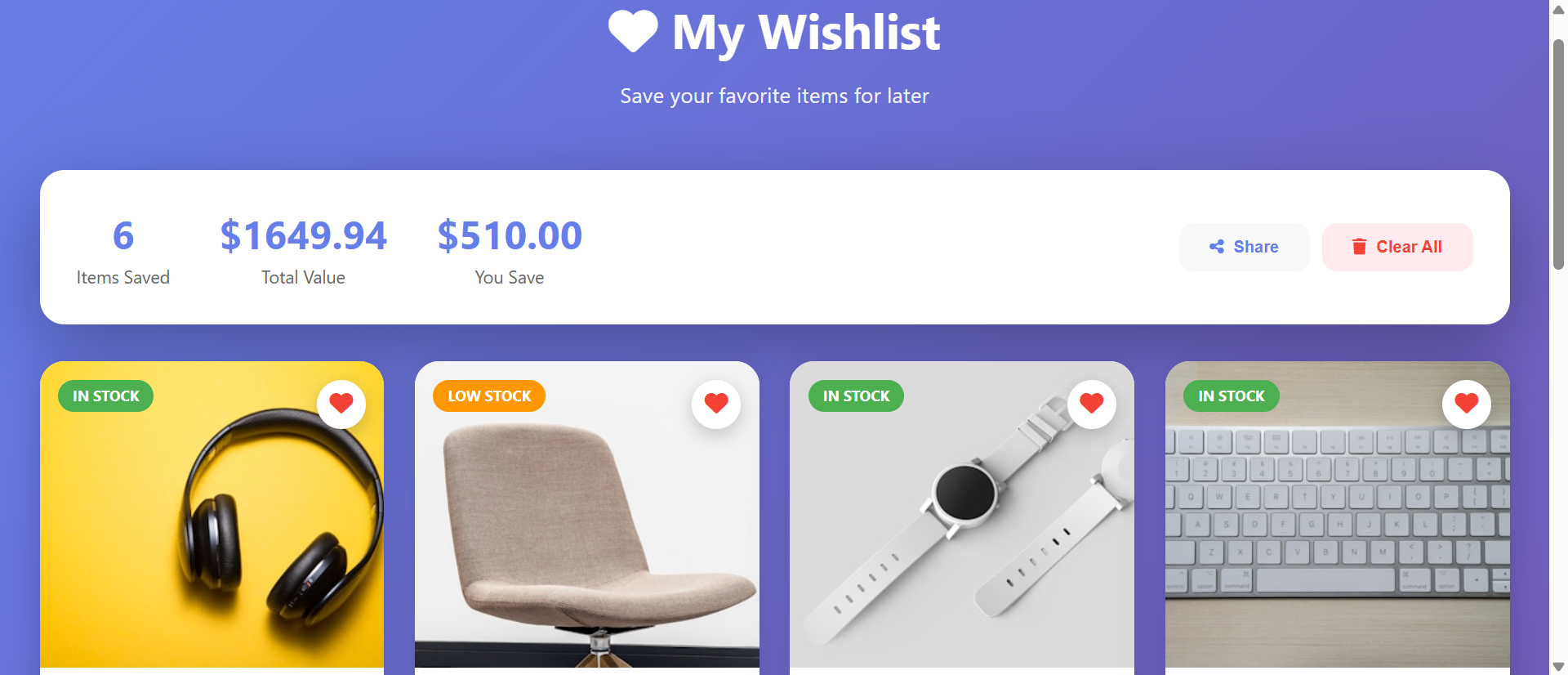
Dedicated wishlist page displaying all saved items with images, names, prices, availability. Shoppers return days or weeks later to review what they saved. "Which of these 8 lamps do I actually want?" This curated review process converts delayed interest into informed purchases. Wishlist page becomes personal shopping collection that drives eventual conversion.
3. Price Drop Notifications Trigger Return Purchases
Email shoppers when wishlisted items go on sale: "The winter jacket you saved is now $175 (was $250)." This targeted communication reaches high-intent shoppers with news that directly addresses their objection (price). Conversion rates on price drop emails exceed 40% because recipients already demonstrated interest—you're just removing the barrier.
Smart implementations also notify when sold-out items return to stock: "The blue lamp in your wishlist is back in stock!" Urgency + interest = purchase.
4. Wishlist Reminders Bring Shoppers Back
Periodic emails: "You have 5 items in your wishlist" with product images and "Add to Cart" buttons. These gentle reminders keep your store top-of-mind. Shoppers who saved items but forgot about them get prompted to reconsider. Email open rates on wishlist reminders average 35-45%—far higher than generic promotional emails—because content is personalized to demonstrated interest.
5. Easy Add-to-Cart From Wishlist Reduces Friction
Wishlist page includes "Move to Cart" or "Add to Cart" buttons for each item. Shoppers ready to purchase can add multiple wishlist items to cart simultaneously without re-searching or re-browsing. This streamlined path from saved interest to purchase removes unnecessary steps. Some shoppers add 5-10 items to cart directly from wishlist—basket size far larger than typical single-product sessions.
6. Shareable Wishlists Enable Gift-Giving and Social Discovery
Wishlist share buttons generate unique URLs: "Share my wishlist with family" creates link shoppers send via email/text/social. Recipients see curated product list with "Buy as Gift" options. This drives gift sales (high AOV) and new customer acquisition (gift-givers discover your store). Wedding registries and baby shower wishlists particularly benefit from social sharing functionality.
See Wishlists in Action
Experience how save-for-later functionality transforms lost product interest into captured revenue opportunities.
Try Live DemoReal-World Applications Beyond Consumer Retail
Wishlist patterns work anywhere users need to save interests for later action:
Fashion and Lifestyle E-Commerce
Fashion shoppers browse extensively, save multiple items, then make purchase decisions over days. Outfit planning, seasonal wardrobe updates, sales shopping—all benefit from wishlists. A fashion retailer saw wishlist adoption at 68% of registered users, with wishlist users accounting for 72% of total revenue despite being minority of traffic.
Home Improvement and Furniture
Large purchases require time, measurement verification, spouse approval, budget planning. Wishlists let shoppers collect furniture pieces for room planning, then purchase when ready. A furniture store saw average wishlist contain 8 items worth $4,200, with 31% conversion rate over 60-day window—far exceeding immediate purchase behavior.
Electronics and Tech Products
Tech shoppers compare specifications, read reviews, wait for price drops. Wishlists enable tracking multiple products during research phase. An electronics retailer implemented price drop alerts on wishlist items and saw 43% of price drop emails convert to purchases within 48 hours.
B2B Procurement and Wholesale
Business buyers create project-specific wishlists (equipment for new office, supplies for construction project). Wishlists become procurement planning tools. A B2B supplier saw wishlist feature drive 89% of large orders (over $10K)—buyers collected items over weeks before submitting purchase orders.
Event and Course Platforms
Users save events they're interested in attending or courses they want to take. Wishlist reminders about upcoming event dates or course start times drive enrollments. An online learning platform saw course enrollment increase 56% after implementing wishlist feature because learners saved courses when discovered, then enrolled when ready.
The Psychology Behind Wishlist Effectiveness
Understanding behavioral science reveals why wishlists drive long-term revenue:
Endowment Effect and Psychological Ownership
Once shoppers add items to wishlist, they begin feeling ownership: "my wishlist items." Research shows people value things they own (or feel they own) more than identical items they don't. This psychological ownership increases likelihood of eventual purchase—shoppers feel they already "have" these items and are reluctant to "lose" them.
Commitment and Consistency Principle
The act of saving an item to wishlist is a micro-commitment: "I'm interested in this." Humans have psychological drive to act consistently with previous commitments. Having saved item creates subtle pressure to follow through with purchase. This consistency drive converts more wishlist items than if shopper had to rediscover product from scratch.
Reduced Cognitive Load Through Offloading
Wishlist serves as external memory. Shoppers don't need to remember product names, search terms, or where they saw items—the wishlist remembers for them. This cognitive offloading reduces mental effort and stress. Shoppers are more willing to browse extensively when they trust the system will remember their interests.
Loss Aversion and Price Drop Alerts
"Sale ending soon" or "Price dropped $75" triggers loss aversion—shoppers fear missing out on savings. Price drop notifications leverage this psychological driver, framing purchase as avoiding loss rather than gaining product. Loss aversion is more motivating than gain seeking, making price alerts highly effective conversion tools.
Common Wishlist Mistakes That Reduce Effectiveness
Poorly implemented wishlists can frustrate rather than help:
Requiring Account Creation Before Saving (High Friction)
Forcing login or registration before allowing wishlist access creates massive barrier. Many shoppers refuse to create accounts during casual browsing. Support guest wishlists (cookie/local storage based) that later convert to account-based wishlists. Let shoppers save first, register later when they're ready to purchase.
No Visual Feedback on Save Action
Clicking "Add to Wishlist" with no confirmation—did it work? Shoppers doubt and re-click, potentially removing item. Provide clear feedback: heart icon fills/changes color, toast notification "Added to wishlist," brief animation. Immediate visual confirmation prevents confusion and builds trust in the feature.
Wishlist Page That's Hard to Find or Access
Burying wishlist link in footer or hiding it in account dropdown reduces usage. Prominent header link or icon showing wishlist item count encourages use. "Wishlist (5)" in navigation acts as both access point and subtle reminder of saved items.
No Email Reminders or Price Alerts
Static wishlist that shoppers must remember to check manually wastes the feature's potential. Automated reminders ("You have items in your wishlist") and price/stock alerts bring shoppers back. Silent wishlists generate 40-60% less revenue than wishlists with proactive communication.
Outdated Product Information (Broken Experience)
Showing discontinued products, wrong prices, or sold-out items without clear indication frustrates shoppers. Keep wishlist data current: update prices automatically, show stock status, flag discontinued items. If shopper returns to wishlist seeing wrong information, trust in feature (and store) degrades.
Case Study: A beauty products store implemented wishlist but required account creation before saving and provided no email notifications. Adoption rate: 12% of visitors. They redesigned to allow guest wishlist (no login required), added wishlist badge in header showing item count, implemented weekly wishlist reminder emails, and added price drop alerts. Adoption rate increased to 54%. Revenue from wishlist users increased 267%. Moving wishlist items to cart became third-most-common path to purchase (after search and category browsing). The feature transformed from unused to critical revenue driver through UX improvements.
Measuring Wishlist Impact on Business Performance
How do you know if wishlist feature is driving value?
Wishlist Adoption Rate
What percentage of visitors use wishlist? Healthy adoption: 40-60% of registered users, 15-30% of all visitors (including guests). Low adoption suggests feature isn't discoverable, too much friction, or shoppers don't trust it will work. Track adoption trends over time—should grow as shoppers learn about feature.
Wishlist-to-Purchase Conversion Rate
What percentage of wishlisted items eventually get purchased? Industry average: 20-35% over 90 days. Higher rates indicate strong product-market fit and effective reminder systems. Lower rates might suggest price is barrier (add price drop alerts) or items go out of stock (improve inventory).
Average Wishlist Size and Value
How many items do shoppers save? Typical: 5-12 items. Total value of average wishlist: $300-$800. These metrics indicate shopper intent level. Larger wishlists suggest shoppers are using feature for planning/collection purposes. Track value of wishlists that convert vs. those that don't—informs pricing and product strategy.
Revenue Attribution to Wishlist Feature
What percentage of purchases come from wishlist? Compare users who interact with wishlist vs. those who don't. Expect wishlist users to have 2-4x higher LTV. Track direct attribution (moved item from wishlist to cart) and indirect (had items in wishlist, then purchased via search/category).
Email Engagement Rates
Open rates and click rates on wishlist reminder emails and price drop alerts. Healthy metrics: 35-50% open rate, 15-25% click rate, 8-15% conversion rate. Compare to generic promotional emails (15-25% open, 2-5% click). Higher engagement confirms personalization value.
The Future of Wishlist Technology
Modern wishlists are evolving: AI-powered recommendations ("Based on your wishlist, you might like..."), collaborative wishlists (shared planning with family/friends), cross-device synchronization (save on phone, purchase on desktop), predictive price drop alerts (ML predicts likely sales, notifies preemptively), and social wishlists (public profiles showing taste, driving discovery).
But core principles endure: capture delayed intent, maintain relationship during consideration phase, reduce friction to eventual purchase.
Getting Started: Building High-Converting Wishlists
Ready to capture delayed purchase intent and increase customer lifetime value?
- Add Save Buttons Everywhere: Heart icon or "Add to Wishlist" on product cards, product pages, quick view—make saving effortless
- Support Guest Wishlists: Cookie/local storage for non-registered users—low friction encourages usage
- Provide Clear Save Confirmation: Visual feedback (icon change, animation, toast notification) confirms action
- Create Dedicated Wishlist Page: Show all saved items with images, prices, stock status, "Add to Cart" buttons
- Display Wishlist Count in Navigation: Header badge showing item count—makes feature visible and reminds of saved items
- Implement Email Reminders: Weekly or bi-weekly "You have items in wishlist" with product images and CTAs
- Add Price Drop Alerts: Notify when wishlist items go on sale—high conversion rate emails
- Enable Stock Availability Notifications: Alert when sold-out items return—captures constrained demand
- Include Share Functionality: Generate shareable wishlist URLs for gift-giving and social discovery
- Keep Data Current: Update prices automatically, show stock status, flag discontinued items
- Track Performance Metrics: Adoption rate, conversion rate, revenue attribution, email engagement
The product wishlist module handles all functionality—guest and registered wishlists, visual save confirmations, dedicated wishlist page, email reminders, price drop alerts, share links, mobile optimization. You configure your product catalog and email preferences; it creates the delayed-purchase-capture system that increases customer lifetime value.
Capture Every Purchase Opportunity
See how wishlist functionality transforms fleeting product interest into persistent revenue opportunities through smart reminders and alerts.
View Live Module